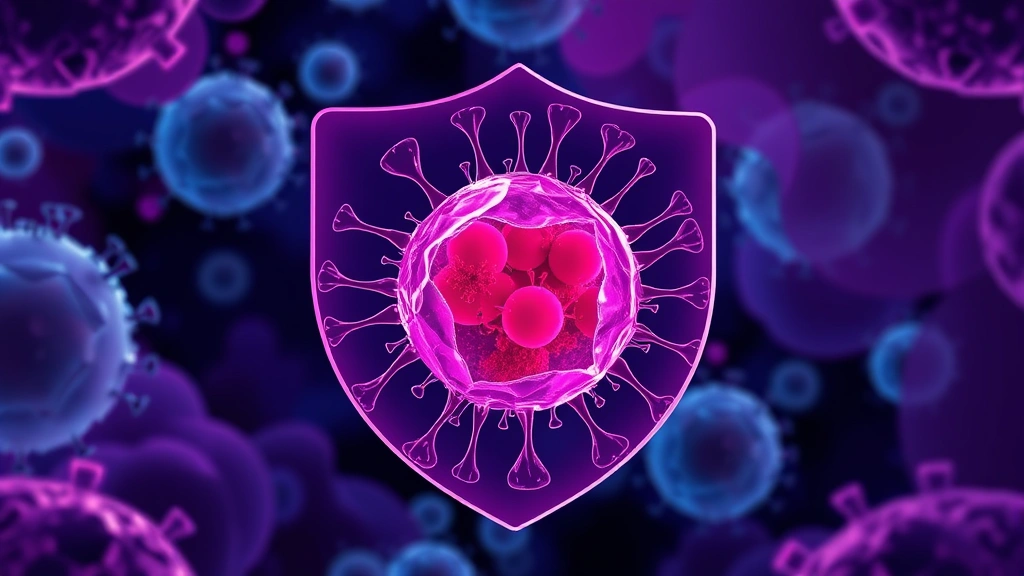
The cruellest feature of breast cancer is its patience. Treatment can appear completely successful and the disease can still return years later — in hormone-receptor-positive disease, recurrences occur well beyond a decade after diagnosis. New research maps part of the reason: dormant cancer cells shelter inside protective niches of other cells.
The work comes from the MRC Laboratory of Medical Sciences, Imperial College London and the UCL Genetics Institute, and was published in Genome Medicine (DOI 10.1186/s13073-026-01711-0).
What dormancy means, and why it defeats chemotherapy
Most cancer cells divide rapidly, and most conventional chemotherapy exploits exactly that — it is designed to poison cells in the act of replicating. Quiescent cells have withdrawn from the cell cycle into a resting state, typically under stress. They are alive, they are metabolically active, and they are not dividing.
That single property makes them nearly invisible to treatments built around proliferation. They survive therapy, persist as minimal residual disease, and can re-enter the cell cycle long after the patient has been declared free of disease.
“Quiescent cancer cells are very dangerous,” said Dr Alexis Barr of the MRC Laboratory of Medical Sciences, who heads its Cell Cycle Control group. “These cells can hide from chemotherapy.”
How the team found the hiding place
The study combined two techniques on publicly available breast tumour data. Single-cell RNA sequencing reveals which genes each individual cell is expressing, allowing dormant cells to be identified by their molecular signature rather than by appearance. Spatial transcriptomics adds the missing dimension: it preserves where each cell sits, so neighbours can be identified.
That combination is what made the finding possible. Knowing that dormant cells exist in a tumour is old news; knowing precisely which cell types surround them is new, and it is a question single-cell sequencing alone cannot answer, because dissociating a tumour into individual cells destroys the architecture.
What surrounds the dormant cells
Two cell types recurred around quiescent tumour cells: CXCL10-positive macrophages and myofibroblastic cancer-associated fibroblasts.
Macrophages are immune cells; CXCL10 is a signalling molecule normally associated with recruiting immune cells to a site. Cancer-associated fibroblasts are connective-tissue cells co-opted by the tumour, and the myofibroblastic subtype in particular produces dense extracellular matrix. Together they appear to form what the researchers describe as physical and biological shields.
“Cancer cells are encapsulated within areas of macrophages and fibroblasts acting as shields,” said Dr Maria Secrier, who led the computational analysis at UCL.
The team also found elevated activity in the complement pathway — part of innate immunity — within these niches, pointing to a specific, druggable process rather than a purely structural barrier.
Why this changes the therapeutic question
If dormant cells are protected by identifiable neighbours, then the target need not be the cancer cell itself. Three directions follow: disrupting the supporting cells that form the niche, modulating the complement pathway active within it, and designing combination regimens that address proliferative and quiescent tumour regions with different agents.
The last point reframes something clinicians have long observed. A tumour is not uniform, and a single-agent therapy may work efficiently in one region while leaving another essentially untouched — not because of acquired resistance, but because different regions were never equally vulnerable to begin with.
Wake them up, or keep them asleep?
Findings like this feed a genuine strategic disagreement in cancer research about what to do with dormant cells at all.
One camp argues for forcing them out of dormancy and then killing them — deliberately driving quiescent cells back into the cell cycle so that conventional cytotoxic therapy, which needs dividing cells, can reach them. The appeal is that it aims at eradication. The risk is obvious: if the awakening works better than the killing, the intervention has converted a silent reservoir into active disease.
The other camp argues for keeping them asleep indefinitely — treating dormancy as a manageable chronic state rather than something to be resolved. A patient with permanently quiescent residual cells does not relapse. The difficulty is that this requires an intervention sustained for decades, and a way to confirm it is still working.
Mapping the niche informs both strategies, because the same supporting cells would need to be disrupted in one and reinforced in the other. It also connects to a practical clinical problem: detecting minimal residual disease at all. Circulating tumour DNA testing has improved the ability to spot residual cancer before it becomes visible on imaging, but a genuinely dormant cell shedding little DNA is difficult to see by any current method.
What has not been shown
This is computational analysis of existing tumour data, and the researchers are clear about its limits. The ideas it generates are experimentally unvalidated. Crucially, cause and effect are unknown: it is not established whether the surrounding macrophages and fibroblasts induce dormancy, whether dormant cells actively recruit their protection, or whether both arise from a shared local condition such as low oxygen.
That distinction matters for drug development. If the niche maintains dormancy, disrupting it might awaken cells into division — potentially useful if paired with chemotherapy that kills dividing cells, and potentially dangerous if not.
There is no human efficacy data, and no candidate therapy. What the work provides is a map and a set of testable targets for a problem — late relapse — that has resisted progress precisely because the cells responsible were so difficult to find. Research news, not medical advice.