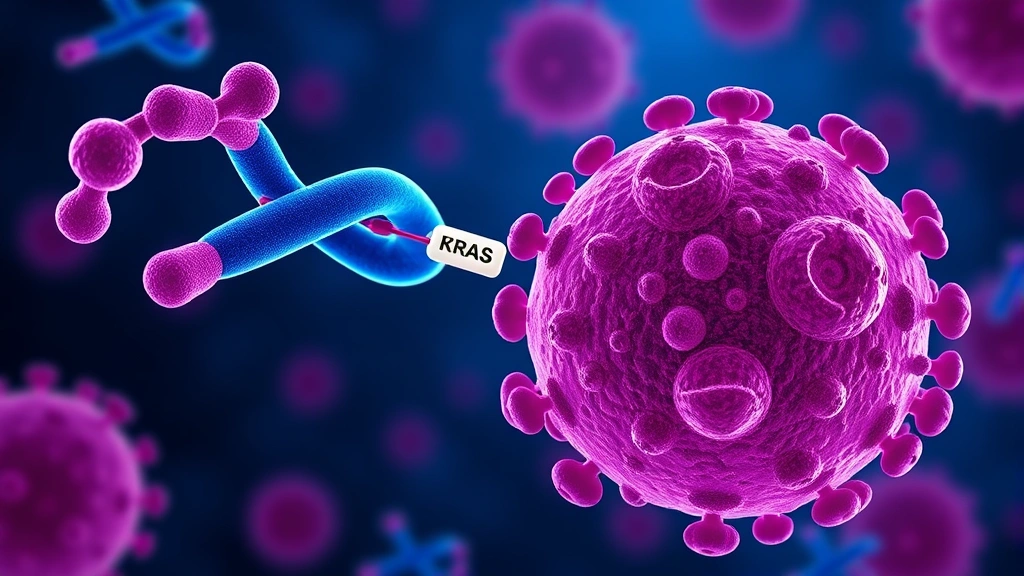
GSK has licensed HMPL-A830 from China’s HUTCHMED in a deal worth $110 million upfront and up to $1.295 billion in total, plus royalties on sales. Announced September 3, 2026, it gives GSK global rights everywhere except Mainland China, Hong Kong, Macau and Taiwan, where HUTCHMED keeps development and commercialization.
What is an antibody-targeted therapy conjugate?
HMPL-A830 is described as an antibody-targeted therapy conjugate (ATTC), and the distinction from a conventional antibody-drug conjugate (ADC) is the whole point of the molecule.
In an ADC, the antibody is essentially a postal address. It recognizes a protein on the tumor surface and delivers a cytotoxic payload; the antibody itself is rarely doing therapeutic work. In an ATTC, the antibody is a drug in its own right. Here it targets and inhibits EGFR (epidermal growth factor receptor) while carrying a small-molecule KRAS inhibitor to EGFR-expressing tumors. Two mechanisms, one molecule.
Why pair EGFR with KRAS?
Because that pairing solves a problem that has dogged KRAS drugs since they arrived. EGFR and KRAS sit on the same signaling pathway — EGFR is upstream, KRAS downstream. When a KRAS inhibitor shuts KRAS down, tumors can reactivate the pathway through EGFR signaling and simply route around the blockade.
This is not theoretical. In colorectal cancer, KRAS G12C inhibitors given alone produced disappointing response rates, and the field’s fix was to add an anti-EGFR antibody on top — sotorasib with panitumumab, adagrasib with cetuximab. Those combinations work better than either agent alone. HMPL-A830 attempts to put that combination inside a single conjugate, with the added benefit that the EGFR-targeting arm should concentrate the KRAS inhibitor in tumor tissue rather than exposing the whole body to it.
Where it would be used
The initial focus is the three tumors where KRAS mutations dominate: pancreatic ductal adenocarcinoma (89%), colorectal cancer (44%) and lung adenocarcinoma (34%). Between them, that is a very large share of the deadliest solid tumors in oncology, and pancreatic cancer in particular has resisted nearly everything.
A global Phase 1 trial (NCT07718581) is planned for the second half of 2026, running dose escalation and dose optimization in patients with unresectable, advanced or metastatic solid tumors that have progressed on standard treatment. HUTCHMED runs Phase 1; GSK takes over development and commercialization outside Greater China after that.
What GSK is buying
“The dual KRAS-EGFR mechanism of HMPL-A830 has the potential to significantly improve upon current standard of care,” said Hesham Abdullah, GSK’s oncology R&D leader.
The deal fits a pattern. GSK already sells the ADC Blenrep in multiple myeloma and holds two more ADCs licensed from Hansoh Pharma. Conjugate chemistry is an area the company has been deliberately accumulating, and an ATTC is an incremental step from that base rather than a leap into unfamiliar territory.
It also fits a much broader pattern in the industry: Western pharmaceutical companies licensing Chinese-originated oncology assets at increasing scale, typically leaving Greater China rights with the originator. HUTCHMED keeps its home market and offloads the cost and complexity of global development.
How much of the $1.3 billion is real?
This is worth stating plainly, because headline biotech deal values routinely mislead. The $110 million upfront is the committed money. The remaining $1.185 billion is development, regulatory and commercial milestones — contingent payments that only arrive if the drug clears successive hurdles. Most licensed candidates never trigger the majority of their milestone schedule, and a modest upfront relative to the headline number is a reasonable indicator of how early and how uncertain the asset is.
What the Phase 1 has to establish
The trial design detail worth noting is that it covers dose escalation and dose optimization, not escalation alone. That reflects the FDA’s Project Optimus initiative, which pushed oncology away from the traditional practice of carrying the maximum tolerated dose forward into registration trials. For decades, oncology dose-finding assumed more was better — a reasonable assumption for cytotoxic chemotherapy, and a poor one for targeted agents where efficacy can plateau well below the toxicity ceiling.
For a molecule like HMPL-A830 the question is unusually pointed, because two mechanisms have to be dosed at once. The antibody component and the KRAS payload arrive in fixed ratio, but their optimal exposures may differ, and their toxicities certainly do — anti-EGFR antibodies characteristically produce rash and diarrhea, while KRAS inhibitors carry their own hepatic and gastrointestinal profile. Finding a dose where both arms are therapeutically active and neither is dose-limiting is the real work of the trial.
The caveats
HMPL-A830 has no human data at all. The case for it rests on preclinical results said to outperform single-agent approaches, and preclinical superiority in conjugates translates unreliably — the ADC field is littered with molecules that looked excellent in mice and failed on toxicity in people. Delivering a small-molecule kinase inhibitor via an antibody also raises questions about payload release, tumor penetration and on-target EGFR toxicity (rash and diarrhea are familiar limits of anti-EGFR antibodies) that only a Phase 1 can answer.
The first meaningful readout will be dose-escalation safety data from a trial that has not yet begun. Business news, not investment advice.