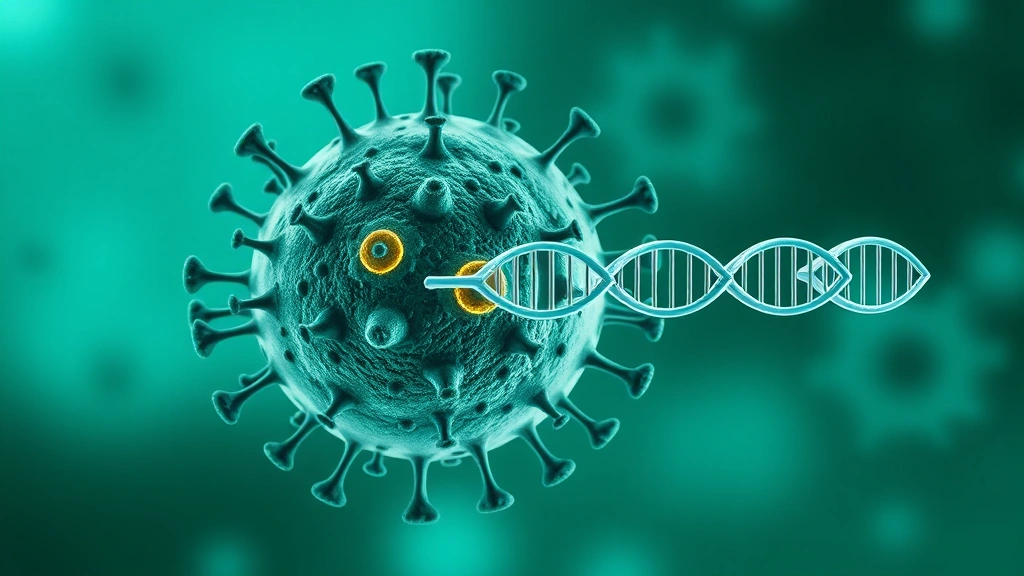
Most influenza vaccines aim at a single target on the virus. GSK is betting that hitting two protects better, and its mRNA flu vaccine is advancing on that basis.
Standard flu shots target hemagglutinin (HA). GSK’s candidate adds neuraminidase (NA), arguing that covering both could improve protection, reduce illness severity and limit transmission.
What the two proteins do
Influenza carries two principal surface proteins, and the H and N in strain names such as H1N1 refer to exactly these.
Hemagglutinin handles entry: it binds receptors on respiratory cells and allows the virus in. Antibodies against HA can block infection outright, which is why it has always been the primary vaccine target and why HA antibody levels are the accepted correlate of protection.
Neuraminidase handles exit: it cleaves the connections holding newly formed virus particles to the infected cell, releasing them to infect others. Blocking NA does not prevent initial infection, but it constrains spread within the body and shedding to other people.
Why adding NA is a different kind of protection
This distinction matters for how the vaccine would be judged. Anti-HA immunity aims to prevent infection. Anti-NA immunity aims to limit its consequences — less severe illness, less onward transmission.
Antibodies against NA have been associated with reduced severity in natural infection, and the target is already validated pharmacologically: the most widely used influenza antivirals are neuraminidase inhibitors, which work precisely by blocking this protein.
NA is also thought to drift somewhat more slowly than HA, meaning immunity against it may hold up better as the virus evolves — potentially offering a partial buffer in seasons where the HA component is mismatched.
Why traditional vaccines have neglected it
Conventional flu vaccines contain some NA, but the amount is neither standardised nor controlled. Manufacturing is built around HA content — doses are specified and released on HA — and whatever NA survives production varies batch to batch.
An mRNA platform changes that. Because the vaccine delivers instructions rather than purified protein, adding a second antigen is a matter of including another sequence at a chosen ratio. Deliberate, quantified NA content becomes straightforward in a way it never was with egg- or cell-based manufacturing.
The data so far
In a Phase 2 trial of 971 adults, two candidates both generated robust immune responses to HA and NA from influenza A and B strains, in younger and older adults, with an acceptable safety profile. GSK selected its optimised candidate for Phase 3, expected to begin later in September 2026.
“These promising data support the potential to better protect people from flu with a vaccine designed to target both HA and NA,” said GSK vaccines R&D head Sanjay Gurunathan.
The competitive context
mRNA influenza vaccines are a live race. Moderna’s mFLUSIVA became the first FDA-approved mRNA flu shot in August 2026 — but like conventional vaccines, it targets HA alone.
That leaves GSK needing a differentiator, since arriving second with an equivalent product is a poor commercial position. The two-antigen design is that differentiator, which is worth keeping in mind when assessing how the strategy is presented. GSK acquired the candidates from CureVac in 2024.
Why mRNA matters for flu specifically
Beyond antigen selection, the platform addresses a chronic weakness in influenza vaccination: timing. Strain selection for conventional vaccines happens roughly six months before the season because egg-based manufacturing takes that long. In those months the circulating virus can drift away from the chosen strains, and mismatched seasons with poor effectiveness are a recurring result.
mRNA production is faster and does not depend on eggs, in principle allowing strain selection closer to the season. Whether regulatory and distribution timelines actually permit that advantage to be realised is a separate question.
What Phase 3 must show
The Phase 2 result is immunogenicity — the vaccine generates antibodies against both targets. That is a necessary step and not the claim being made.
The claim is better protection, reduced severity and limited transmission, and demonstrating it requires showing clinical benefit over an HA-only comparator. That is a demanding trial: influenza vaccine efficacy studies need large populations and depend on a season with enough circulating virus to generate events. Transmission reduction is harder still to measure, typically requiring household or community designs rather than individual randomisation.
Why flu vaccination underperforms in the people who need it most
Behind the two-antigen strategy sits an uncomfortable fact: influenza vaccines work least well in the population with the most to lose.
Effectiveness in healthy adults is moderate in a good season. In older adults — who account for the large majority of influenza deaths and hospitalisations — it is lower, because immune responses to vaccination weaken with age. That is the reason high-dose and adjuvanted formulations exist specifically for older recipients.
This is why the Phase 2 result being reported in both younger and older adults is worth noting, and why a mechanism aimed at reducing severity rather than preventing infection is strategically sensible. For a frail older patient, an infection that stays mild is a substantially better outcome than one prevented in a healthy twenty-year-old — and severity reduction may be a more achievable goal in an ageing immune system than sterilising immunity.
There is also no established correlate of protection for NA antibodies comparable to the one used for HA, so regulators will be evaluating a claim without an agreed surrogate. Vaccine research news; not medical advice.