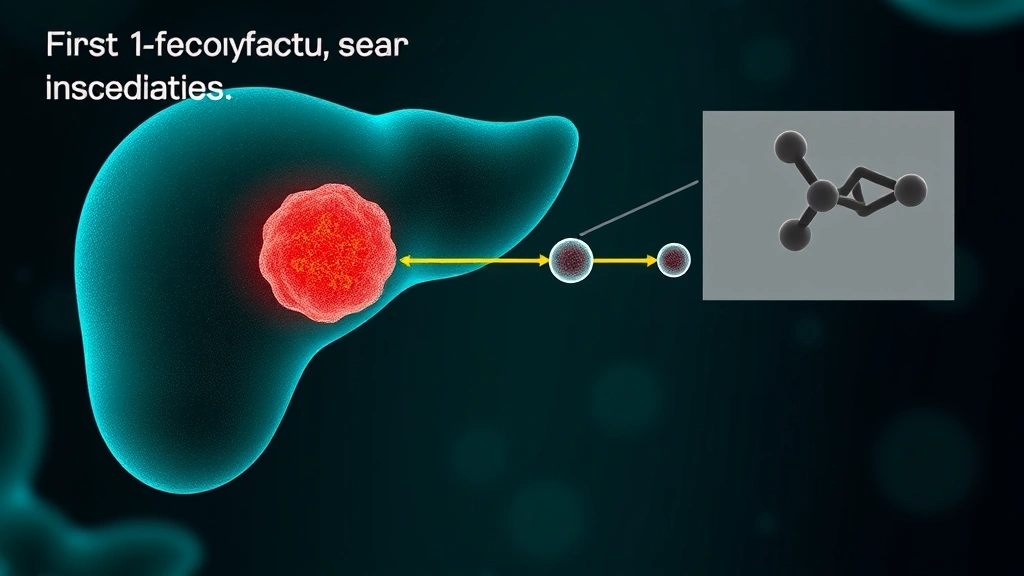
The FDA has approved Rasonque (daraxonrasib) — the first targeted therapy to strike at RAS, the central cancer-driving pathway in pancreatic cancer — in one of the deadliest and hardest-to-treat malignancies.
Cleared August 26, 2026, the once-daily drug from Revolution Medicines is approved for adults with metastatic pancreatic adenocarcinoma who have had at least one prior systemic therapy or are not candidates for multi-drug chemotherapy.
Why RAS was called undruggable
More than 90% of pancreatic cancers carry mutations in KRAS, part of the RAS family. RAS proteins act as molecular switches relaying growth signals; mutations lock them in the “on” position, driving continuous proliferation.
RAS has been among the most obvious targets in oncology since the 1980s, and it defeated the field for four decades. The reason is structural. Most drugs work by fitting into a pocket on a protein — a cleft where a small molecule can bind tightly. RAS is nearly spherical and unusually smooth, offering almost nowhere to grip.
It also binds its natural partner GTP with such extraordinary affinity, and at such high cellular concentrations, that designing a competitor was considered essentially impossible.
What changed
The breakthrough came from discovering a transient pocket that appears near a specific mutation, allowing drugs to bind covalently — but those first agents worked only against one particular KRAS mutation, common in lung cancer and rare in pancreatic.
Pancreatic cancer is dominated by different KRAS mutations, which the first-generation drugs could not touch. A drug described as a broad RAS-targeted medicine addresses that gap — which is why this approval matters for pancreatic cancer specifically rather than being an extension of existing capability.
The survival data
In a randomised, open-label trial of 500 adults with previously treated metastatic pancreatic cancer, Rasonque improved median overall survival to 13.2 months, versus 6.7 months for standard chemotherapy — nearly doubling it.
Overall survival is the endpoint that admits no argument. It is not progression-free survival, not response rate, not a surrogate — it is how long patients lived. And the comparison was against active chemotherapy rather than placebo.
Doubling median survival in second-line metastatic pancreatic cancer is a result the field has not seen. Incremental gains of weeks have been the norm.
Keeping the numbers in perspective
13.2 months is a doubling and it remains 13.2 months. Patients in this setting still die of their disease, and the drug extends life rather than offering a realistic prospect of cure.
Median also means half of patients did worse. In a disease with this trajectory, the distribution matters — and whether a subset achieved substantially longer benefit is the question that determines how the drug is ultimately used.
The trial was also open-label, which is standard when comparing an oral drug against intravenous chemotherapy but affects softer endpoints. Overall survival is not one of them.
Why pancreatic cancer has been so resistant
Beyond KRAS, several features conspire. It is usually diagnosed late, because early tumours produce no symptoms and the pancreas sits deep in the abdomen. The tumours develop a dense fibrous stroma that physically impedes drug penetration and creates an immunosuppressive environment, which is part of why immunotherapy has largely failed here. And there have been few targetable alterations beyond the one nobody could drug.
Treatment options have barely changed in years, resting on chemotherapy combinations that are demanding to tolerate and modestly effective.
The regulatory pathway
The FDA granted Breakthrough Therapy and Orphan Drug designations and Priority Review, and reviewed the drug through a national-priority pilot programme intended to accelerate high-impact treatments.
The accumulation of designations reflects how the agency assessed the unmet need. Notably this was a full approval on an overall survival endpoint rather than an accelerated approval on a surrogate, which means no confirmatory obligation hangs over it.
The wider significance
Beyond pancreatic cancer, this validates a broader effort to make RAS druggable across many cancer types. RAS mutations occur in a substantial share of all human cancers — prominently in colorectal and lung as well as pancreatic — and a broad RAS-targeting approach is applicable well outside this indication.
What resistance will look like
Targeted cancer therapies almost invariably meet resistance, and anticipating its shape is part of judging how this drug will be used.
Experience with the first-generation KRAS inhibitors is instructive. Tumours escaped through several routes — new mutations altering the drug binding site, amplification of the target, and reactivation of the same growth pathway through parallel signals upstream or downstream of RAS. Responses were frequently shorter than the initial data suggested.
A broad RAS-targeted agent may prove harder to evade, since it is not dependent on a single mutation-specific binding pocket. But the pathway has redundancy, and the escape routes running around RAS rather than through it remain available.
The practical implication is that combinations will follow. Pairing RAS inhibition with agents blocking the compensating pathways is the strategy that extended benefit for earlier targeted drugs in other cancers, and it is the obvious next line of development here — alongside testing the drug earlier in treatment, before resistance has had time to accumulate.
A target that resisted the field for forty years yielding a survival benefit in its hardest disease is the strongest possible argument for pursuing it everywhere else. Regulatory news, not medical advice.