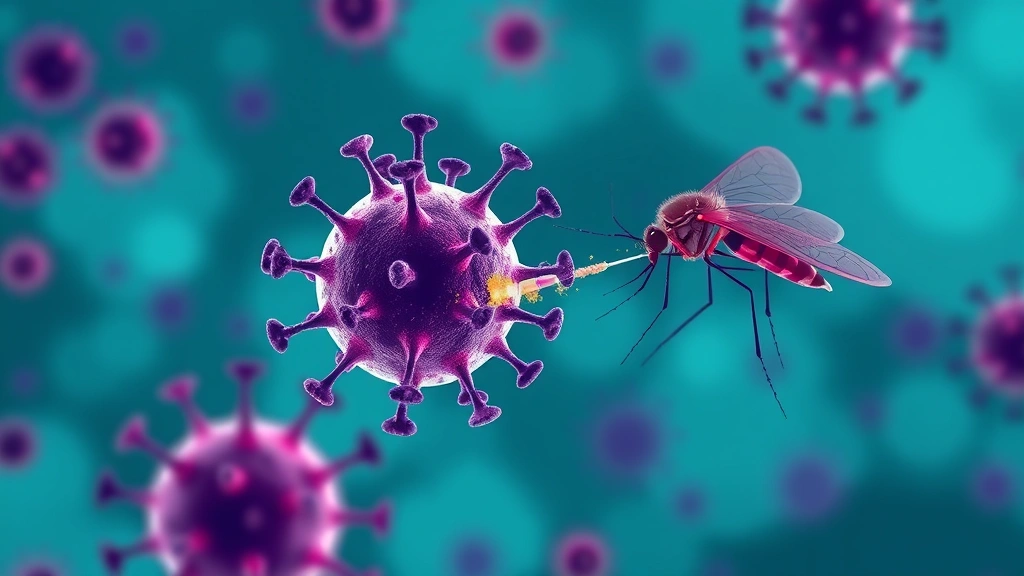
Most vaccines aim to trigger protective antibodies. For Zika, antibodies come with a genuine liability — and researchers have shown a way around it, using T cells instead.
Scientists at the La Jolla Institute for Immunology, led by Sujan Shresta, built an experimental Zika vaccine designed to protect primarily through CD8+ T cells rather than neutralising antibodies. The work was published in Nature Microbiology.
The problem with Zika antibodies
Zika closely resembles dengue — both are flaviviruses with similar surface proteins — and that similarity creates a specific danger.
Antibodies raised against Zika can cross-react with dengue without neutralising it effectively. Rather than blocking the virus, such antibodies can bind it and then help it enter immune cells that carry receptors for antibody tails — delivering the virus into the very cells meant to destroy it, and increasing rather than reducing infection.
This is antibody-dependent enhancement, and it is not theoretical. It explains why second dengue infections with a different serotype are frequently more severe than first ones, and a dengue vaccine deployed at scale caused increased severe disease in previously uninfected recipients — a serious setback for the field.
A Zika vaccine generating cross-reactive antibodies could therefore leave recipients worse off when they later encounter dengue. In the regions where Zika matters most, both viruses circulate together.
The counterintuitive design
The team introduced mutations in the virus’s envelope protein fusion loop — the region that normally generates cross-reactive antibodies.
The result is a vaccine that eliminated antibody protection while retaining T-cell defence. That is a deliberate sacrifice of the mechanism vaccines are usually built around, on the grounds that in this specific pairing of diseases, the antibody response is a liability rather than an asset.
How they proved it was T cells
The evidence is clean, and it comes from transfer experiments rather than correlation.
CD8+ T cells from vaccinated animals, transferred alone to unvaccinated ones, reduced Zika levels. That establishes the cells are sufficient for protection by themselves.
Conversely, transferring antibodies from the mutant vaccine provided no protection — confirming the antibody arm was genuinely eliminated rather than merely reduced.
Together those two results demonstrate causation in both directions. “This vaccine wasn’t protecting via antibodies. It was protecting via T cells,” Shresta said.
Why T cells are a plausible substitute here
Antibodies and T cells work differently. Antibodies intercept virus before it enters cells, potentially preventing infection outright. CD8+ T cells recognise and kill cells that are already infected, limiting how far the virus spreads.
T cells therefore do not prevent infection, and they are not vulnerable to enhancement — killing an infected cell cannot help a virus the way a non-neutralising antibody can. They also typically recognise internal viral proteins that are more conserved across related viruses and mutate more slowly.
For a disease whose worst outcomes involve viral spread rather than initial infection — Zika’s gravest consequence being transmission to a fetus — limiting spread may be the more relevant capability.
The trade-off
T-cell protection was less durable, fading within about 12 weeks in mice.
This is a serious limitation rather than a detail. Antibody responses can persist for years; T-cell memory in this setting waned within three months. A vaccine requiring re-administration quarterly is not deployable in the low-resource settings where Zika circulates.
Durability would need to be solved before the approach is viable — through adjuvants, altered delivery, or prime-boost schedules designed to establish longer-lived memory populations.
Why the strategy still matters
Zika vaccine development has been stalled partly by this exact problem. Any candidate must demonstrate not only that it protects against Zika but that it does not worsen dengue — a requirement that is difficult, expensive and slow to satisfy, and that has deterred development.
A vaccine generating no cross-reactive antibodies removes that hazard by construction rather than having to disprove it empirically. That is a meaningfully simpler regulatory and safety proposition.
The caveats
This is early preclinical research in mice, and mouse models of flavivirus infection require immune manipulation to work at all, since normal mice resist Zika — which complicates interpretation of immune findings.
Why Zika still needs a vaccine
Zika largely disappeared from headlines after the 2015-16 epidemic subsided, which has made sustained vaccine development harder to fund — and the reasons it still matters have not gone away.
For most people infection is mild or unnoticed. The danger is concentrated in pregnancy, where the virus can cross the placenta and disrupt fetal brain development, producing congenital abnormalities including severe microcephaly and lifelong neurological impairment. That is what made the epidemic an emergency, and it is why a vaccine targeting women of childbearing age remains a public health priority.
The mosquito species carrying Zika are also expanding their range, and populations that experienced the epidemic have partial immunity that will wane in those born since. The conditions for another outbreak have not been removed — only the urgency has, which is the familiar pattern that leaves the world unprepared for the next one.
Human T-cell responses are also more variable than mouse responses, depending on the specific immune-presentation genes an individual carries. A vaccine relying entirely on T cells may protect some people considerably better than others — a variability antibody-based vaccines largely avoid. Preclinical research; not medical advice.